
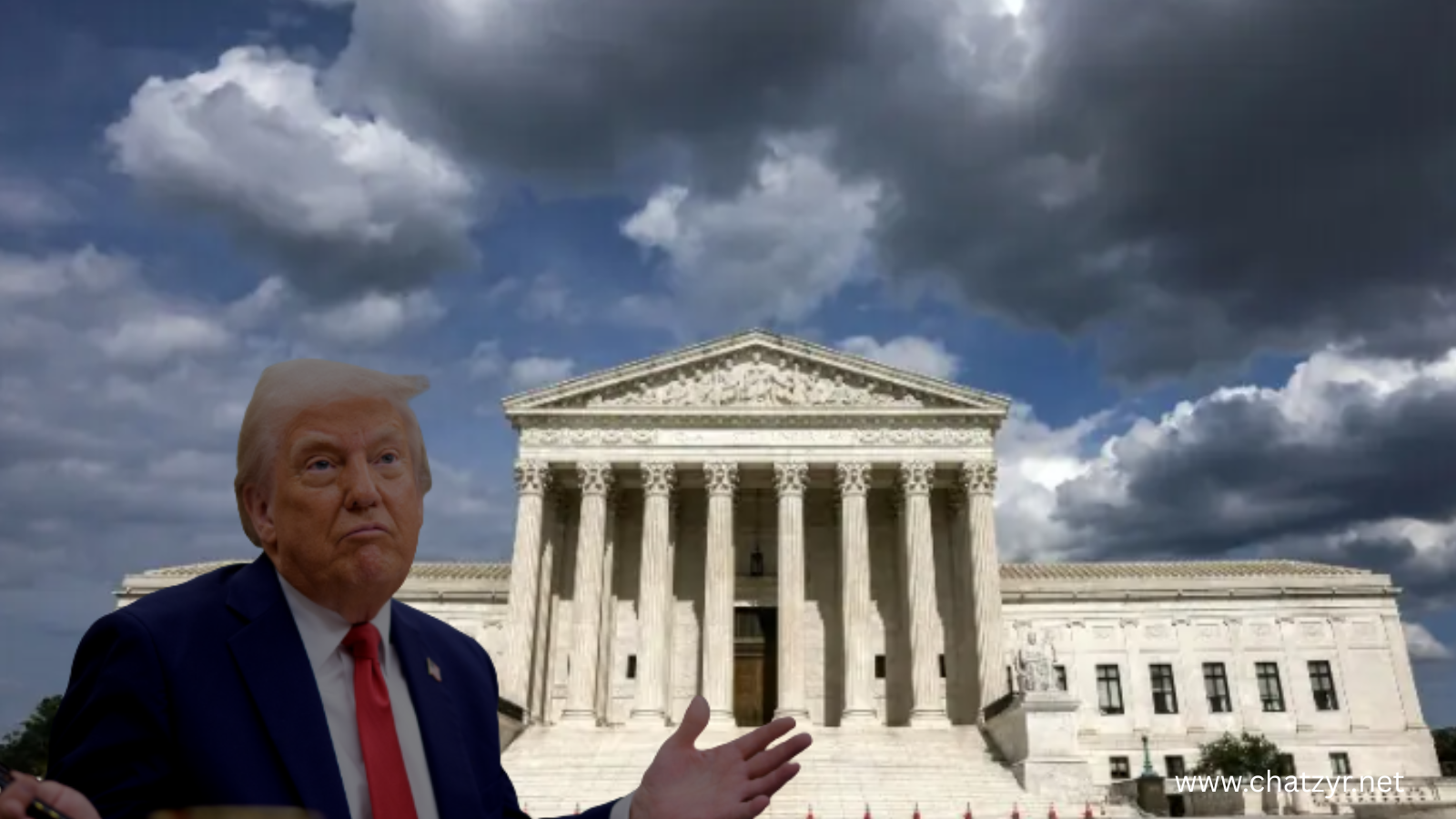
Supreme Court Blocks Trump Tariffs in 6–3 Ruling, Reshaping US Trade Policy
By Editorial Desk | Team Chatzyr
In a historic decision on February 20, 2026, the US Supreme Court ruled 6–3 that former President Donald Trump exceeded his constitutional authority by imposing sweeping global tariffs under emergency powers.
Chief Justice John Roberts, writing for the majority, stated that the Constitution clearly assigns tariff and taxation authority to Congress. The court held that the International Emergency Economic Powers Act does not authorize a president to unilaterally impose across-the-board import taxes on nearly all trading partners.
The ruling affirms earlier judgments by the US Court of Appeals for the Federal Circuit, which sided with small businesses and 12 states challenging the tariffs. Justices Clarence Thomas, Samuel Alito and Brett Kavanaugh dissented.
The contested tariffs, introduced during Trump’s second term, were framed as essential for economic security and trade leverage. Economists estimated more than $175 billion had been collected under the IEEPA-based measures, with projections previously suggesting hundreds of billions annually if maintained.
Following the decision, major US stock indexes rose as markets reacted to the reduced uncertainty surrounding global trade policy. Administration officials indicated alternative statutory tools may be considered, including national security-based trade provisions.
In its opinion, the court emphasized that emergency powers cannot be stretched beyond clear congressional authorization, reinforcing the constitutional separation of powers.
Why it matters now: The ruling narrows executive authority over trade, restores congressional primacy in tariff policy and signals to global markets that US trade decisions remain subject to judicial review amid ongoing economic tensions.
Published on Chatzyr.net
Written By Editorial Desk | Team Chatzyr