Pakistan Reaffirms Saudi Defence Commitments Amid Rising Houthi Tensions | ChatZyr
By Editorial Desk | Team ChatZyr
Islamabad says it remains committed to its defence arrangements with Saudi Arabia and the Makkah Joint Defence Agreement, while keeping details of any potential military response confidential.
Pakistan has reaffirmed its commitment to implementing its defence arrangements with Saudi Arabia and the Makkah Joint Defence Agreement with Saudi Arabia and Türkiye, as tensions involving Yemen's Houthi movement continue to raise security concerns.
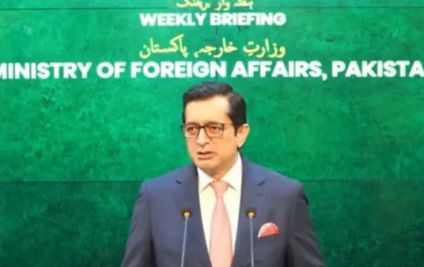
Foreign Office spokesperson Sajjad Haider Khan said on September 17 that Pakistan remained committed “in intent and spirit” to implementing the Strategic Mutual Defence Agreement (SMDA) with Saudi Arabia and the trilateral Makkah defence framework.
Pakistan Keeps Military Response Details Confidential
Asked whether Islamabad had developed a mechanism to help Saudi Arabia counter recent Houthi attacks, Khan confirmed Pakistan's commitment to the agreements but declined to disclose operational details.
He said decisions concerning when, how, where and what force could be used against specific objectives would remain confidential at this stage.
The statement does not announce that Pakistan has launched military operations against Houthi targets in Yemen. Instead, Islamabad has reaffirmed its defence commitments while declining to disclose any operational plans.
This distinction is important because Pakistan's Foreign Office had previously described the Makkah agreement as an evolving security framework requiring mechanisms and institutional structures before its full operationalisation.
What Is the Makkah Joint Defence Agreement?
Pakistan, Saudi Arabia and Türkiye signed the Makkah Joint Defence Agreement on August 7, 2026.
According to Pakistan's Foreign Ministry, the agreement is defensive in nature and is intended to strengthen collective deterrence. It states that an armed attack against any one of the three countries will be regarded as an attack against all three, consistent with the right of individual and collective self-defence under Article 51 of the UN Charter.
The agreement is separate from Pakistan's bilateral defence relationship with Saudi Arabia, although both form part of Islamabad's broader security cooperation with Riyadh.
On August 31, Pakistan, Saudi Arabia and Türkiye held the inaugural meeting of the Strategic Political and Defence Committee established under the Makkah agreement. The three countries agreed to further institutionalise cooperation and establish a secretariat in Saudi Arabia.
Why the Houthi Issue Matters
The latest Pakistani statement comes amid renewed tensions involving Saudi Arabia and Yemen's Houthi movement.
A Saudi-led coalition recently alleged that a Houthi drone had been intercepted while heading towards Makkah. Houthi officials rejected the allegation and disputed Riyadh's account. These competing claims remain attributed claims rather than independently established facts.
Pakistan has also called the situation around the Bab al-Mandeb Strait exceptionally serious and urged the Houthis to stop their activities.
At the same time, Islamabad has continued to publicly advocate dialogue and diplomacy as the preferred means of reducing regional tensions.
Pakistan's Defence Commitment to Saudi Arabia
Pakistan's latest position comes one day after Defence Minister Khawaja Asif said Pakistan would stand by Saudi Arabia “practically and diplomatically” if the situation involving the Houthis escalated.
Separately, Pakistan's military spokesperson, Lt Gen Ahmed Sharif Chaudhry, said the Makkah Defence Alliance is intended for collective deterrence and defence and has no regional expansion objectives.
The statements from the Foreign Office, Defence Ministry and military spokesperson therefore point to a common theme: Pakistan is reaffirming its security commitments while keeping the details of any potential military response undisclosed.
PM Shehbaz to Lead Pakistan's UNGA Delegation
The Foreign Office also confirmed that Prime Minister Shehbaz Sharif will lead Pakistan's delegation to the 81st session of the United Nations General Assembly in New York next week.
He will be accompanied by Deputy Prime Minister and Foreign Minister Ishaq Dar and other federal ministers.
According to the Foreign Office, the prime minister is expected to address regional and global developments, sustainable development, climate change, counter-terrorism, Islamophobia, global economic challenges, UN reform and issues concerning the Global South.
He is also expected to highlight Pakistan's positions concerning Kashmir and Palestine and hold bilateral engagements with world leaders and the UN secretary general.
Pakistan-India Issues Also Raised
The Foreign Office briefing also addressed reports concerning Pakistani Sikh pilgrims travelling to India.
Pakistan rejected reports that the pilgrims had simply been prevented from boarding their flight, saying the visas issued by the Indian High Commission were not covered by the 1974 bilateral protocol governing pilgrimage visits.
The spokesperson said Pakistan remained committed to welcoming Sikh pilgrims and also discussed the Kartarpur Corridor.
The briefing additionally covered India's participation in a Shanghai Cooperation Organisation border-services meeting and India's objections to the Pakistan-China Joint Boundary Demarcation Commission.
Pakistan rejected India's objections and maintained its position regarding the 1963 Sino-Pakistan Boundary Agreement. These positions are presented here as statements by the respective governments rather than independent determinations of the disputed issues.
Why It Matters Now
Pakistan's latest statement clarifies an important distinction: Islamabad is reaffirming its defence commitments to Saudi Arabia, but it has not publicly announced a military operation against the Houthis.
The Makkah agreement is being institutionally developed, while Pakistan says decisions concerning any possible military response will remain subject to operational confidentiality.
For now, Islamabad is combining its stated defence commitments with calls for dialogue, diplomacy and regional de-escalation.
Disclaimer: This article is based on statements from Pakistan's Foreign Office, official Pakistani government material and cited reporting available on September 17, 2026. Claims concerning military activity and disputed incidents are presented as attributed claims and have not been independently verified by ChatZyr.
Published on Chatzyr.net
Written By Editorial Desk | Team ChatZyr