Iran vs US & Israel: Who Really Wins If the Conflict Expands?
By Editorial Desk | Team Chatzyr
Global Affairs | March 2026
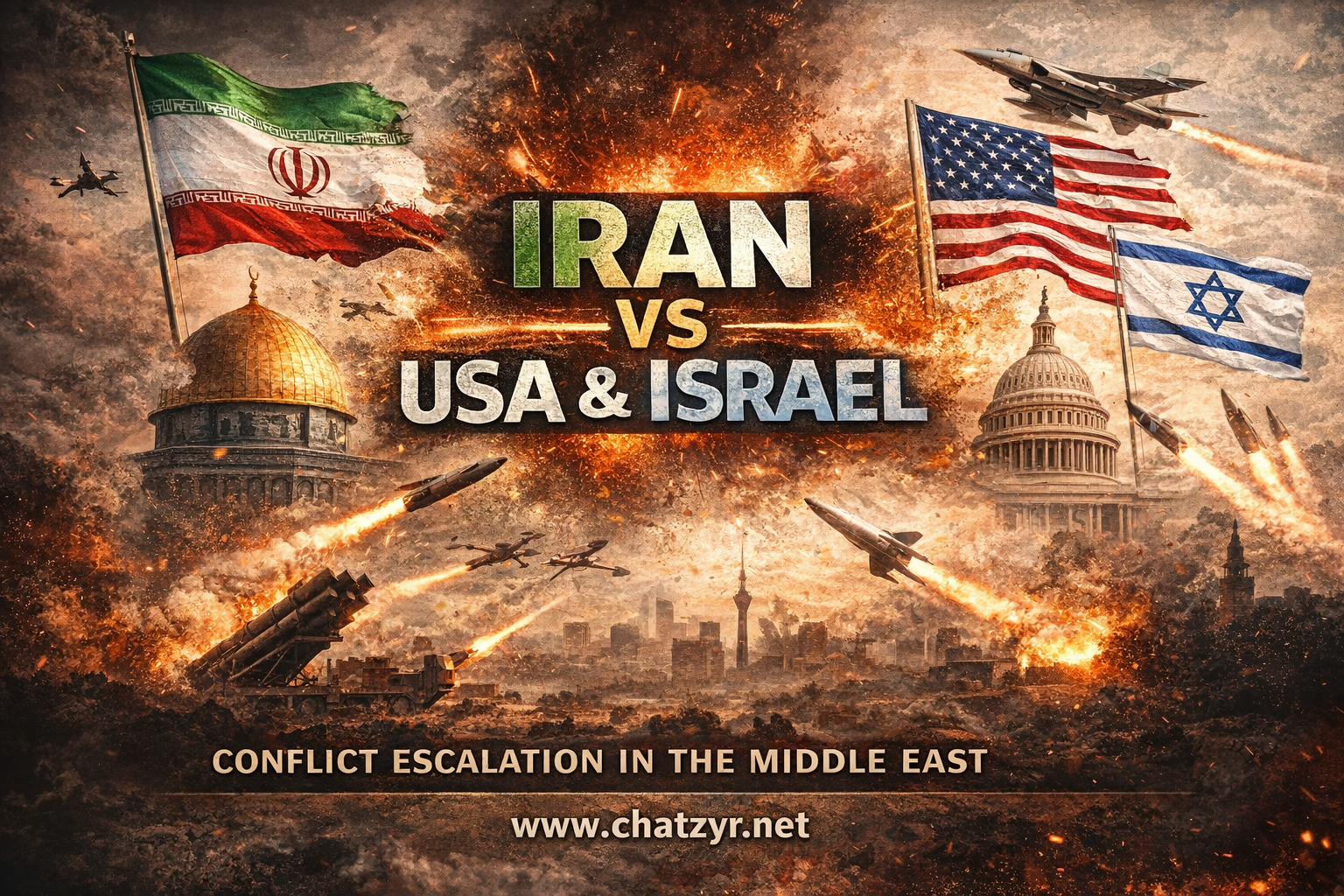
As tensions rise between Iran, the United States and Israel, global markets and regional powers are asking a defining question: who stands to gain strategically if escalation continues?
There is no clear winner at this stage. The United States and Israel retain overwhelming airpower and advanced missile defense systems, giving them tactical superiority in direct confrontation. However, Iran maintains retaliatory capability through ballistic missiles, drone networks and regional allies across Iraq, Lebanon, Syria and Yemen.
Strategic outcomes depend less on single strikes and more on endurance. Modern conflicts are often decided by economic resilience, political stability and alliance cohesion rather than battlefield events alone.
According to international energy assessments, roughly 20 percent of global oil trade passes through the Strait of Hormuz, a chokepoint adjacent to Iran. Any sustained disruption could immediately impact global energy prices, inflation and shipping insurance costs. Even limited instability increases volatility across oil, currency and equity markets.
What Happens to the Middle East Trade Hub?
The Gulf region, particularly the UAE, Saudi Arabia and Qatar, has become a critical logistics corridor linking Asia, Europe and Africa. Billions of dollars in port infrastructure, aviation networks and energy exports depend on regional stability.
Short term escalation raises costs. Long term collapse is unlikely. Trade routes may diversify, defense spending will rise, and diplomatic pressure for de escalation will intensify to protect economic interests.
Is There a Strategic Winner?
If Iran absorbs pressure without regime destabilization, it avoids defeat. If Washington fails to secure long term deterrence or political change, its strategic objectives remain incomplete. In prolonged conflicts, stalemate often replaces victory.
Why it matters now: The future of global energy security and one of the world’s most important trade corridors hinges on whether escalation continues or containment prevails.
Published on Chatzyr.net
Written By Editorial Desk | Team Chatzyr