Iceland Votes No to Resuming EU Membership Talks in Close Referendum | ChatZyr
By Editorial Desk | Team ChatZyr
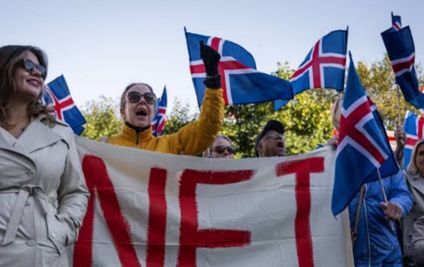
Iceland has voted against resuming negotiations on European Union membership, closing the door, for now, on a renewed attempt to examine whether the country should join the bloc.
In the August 29 referendum, 52.8% of voters rejected the proposal, while 47.2% supported restarting negotiations. Turnout reached around 82.5%, reflecting the importance of the issue to Icelandic voters.
The result means Iceland will not restart EU accession talks under the current political mandate.
But there is an important distinction: Icelanders were not voting directly on EU membership.
The referendum asked whether the country should resume negotiations. Even if voters had approved the proposal, any eventual membership agreement would have required further political and democratic approval.
What exactly did Iceland reject?
The referendum asked voters whether Iceland should resume negotiations with the European Union.
A Yes vote would have allowed the government to reopen accession talks and examine the terms under which Iceland could potentially become an EU member.
Instead, voters chose No.
The referendum was advisory, but the government had said it would respect the result.
Prime Minister Kristrún Frostadóttir, whose government supported reopening the negotiations, therefore faces a clear political setback.
For now, the question of Iceland joining the EU has been pushed back into the background.
Fishing at the centre of the debate
One of the biggest issues behind the opposition was fishing.
Iceland's fishing industry is economically important and closely linked to the country's national identity and sovereignty.
Opponents of reopening EU negotiations argued that closer integration with the bloc could eventually limit Iceland's ability to control its own fisheries and marine resources.
For many voters, the debate was therefore not simply about membership of a political and economic union.
It was about who should make decisions over Iceland's natural resources.
That argument helped give the No campaign strong support outside the capital.
Supporters argued for closer European ties
Those who backed reopening negotiations pointed to potential economic and strategic advantages.
They argued that EU membership could give Iceland greater influence within Europe and potentially provide additional economic and political options at a time of geopolitical uncertainty.
Iceland is already closely integrated with Europe, but it remains outside the EU.
Supporters therefore saw renewed negotiations as a way to determine whether full membership could offer advantages that the country's existing arrangements do not provide.
Iceland is already part of Europe's economic system
The referendum does not mean Iceland is turning away from Europe.
Iceland is a member of the European Economic Area (EEA), giving it access to the EU's single market.
It is also part of the Schengen Area, allowing passport-free travel across participating European countries.
As a result, Iceland already has extensive economic and social links with the EU without being a member of the bloc.
The referendum was about whether to take the next step towards possible membership — not whether to end Iceland's existing European relationships.
Iceland's EU journey began in 2009
Iceland applied for EU membership in 2009, following the country's severe financial crisis.
Formal accession negotiations began in 2010, with Iceland opening talks on numerous areas of EU policy.
But political support for membership weakened.
A new government suspended the accession process in 2013, effectively bringing the negotiations to a halt.
Iceland later moved to withdraw its application, but the issue remained politically sensitive.
More than a decade later, the question returned to national politics.
This time, voters were asked whether negotiations should be reopened.
They said no.
A country divided over Europe
The result exposed a significant geographical and political divide.
Reykjavík voted in favour of resuming negotiations, while the other constituencies voted against the proposal.
The narrow national margin also shows that Iceland remains divided over the country's long-term relationship with the EU.
The high turnout — more than four out of every five voters — underlined the significance of the question.
This was not a marginal political issue.
It was a national debate over sovereignty, economics, fishing and Iceland's place in Europe.
What happens next?
The immediate result is straightforward:
Iceland will not resume EU accession negotiations following the referendum.
The government has indicated that it will respect the outcome.
The country will continue its existing relationship with Europe through arrangements such as the EEA and Schengen while remaining outside the European Union.
The result does not permanently prevent Iceland from reconsidering EU membership in the future.
But politically, the referendum makes any renewed push considerably more difficult in the near term.
More than an anti-EU vote
The result should not simply be described as Iceland rejecting Europe.
Iceland remains deeply connected to European markets, institutions and travel arrangements.
What voters rejected was the restart of a process that could eventually have led to EU membership.
That distinction matters.
The referendum was ultimately about whether Iceland should reopen the question.
The answer from a majority of voters was:
Not now.
For Prime Minister Frostadóttir's government, the result represents a significant political setback.
For opponents of EU membership, it represents a decision to preserve Iceland's control over its own affairs — particularly its valuable fisheries.
And for the European Union, it means Iceland's long-running membership question remains unresolved.
Iceland has not voted to leave the European Union. It has voted against reopening negotiations to potentially join it.
Why it matters: Iceland's referendum closes the door, for now, on renewed EU accession negotiations. The close result highlights continuing divisions over sovereignty, fishing rights, economics and the country's future relationship with Europe.
Disclaimer: This report is based on official referendum information and credible publicly available reporting. The referendum concerned the resumption of EU accession negotiations, not immediate membership of the European Union.
Published on Chatzyr.net
Written By Editorial Desk | Team ChatZyr