
Gaza Building Collapse Kills 21 as Damaged Homes Remain a Risk for Displaced Families | ChatZyr
By Editorial Desk | Team ChatZyr
A building collapse in Gaza City has killed 21 Palestinians and exposed once again the dangers faced by families living in structures damaged during the war.
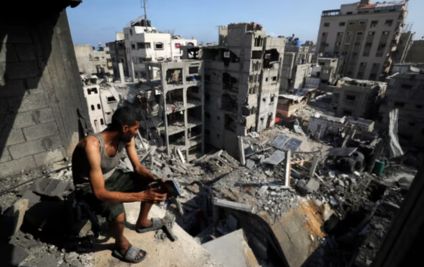
The seven-storey residential building collapsed overnight on September 16 in the Tal al-Hawa area of Gaza City. Reuters reported that 21 people died and 45 were rescued from the rubble after search-and-rescue operations continued into September 17. The building had previously been damaged during Israeli military operations.
The incident has drawn attention to a wider problem across Gaza, where large numbers of displaced people remain without adequate housing and some families are sheltering in damaged structures because safer alternatives are limited.
A Building Already Damaged
The building was not reported to have collapsed as a result of a new strike at the time of the incident.
Rather, Reuters reported that it was a war-damaged building that had been occupied by displaced families. Palestinian officials said the structure was among damaged buildings being used for shelter because of the shortage of available accommodation.
This distinction is important.
The available reporting establishes that the building had previously sustained damage. It does not establish, independently, the precise structural mechanism that caused the final collapse.
21 People Died and 45 Were Rescued
Rescue teams initially feared that many more people were trapped beneath the concrete.
As the operation progressed, the reported numbers changed.
By September 17, Reuters reported that 21 people had been killed and 45 people had been pulled alive from the rubble, marking the end of the search-and-rescue operation at the site.
Earlier reports had provided lower casualty figures while rescuers were still searching. The final figure is therefore the appropriate number to use when reporting the completed rescue operation.
Reuters also reported that children were among those killed.
Why Were People Living in a Damaged Building?
The collapse has raised a basic but important question: why were displaced families living inside a building that had already been damaged?
The answer lies in Gaza's housing crisis.
Large parts of the territory's housing stock have been destroyed or damaged during the war, while millions of people have experienced repeated displacement.
Reuters reported that families have been forced to seek shelter in damaged buildings because of overcrowding and the lack of adequate alternatives.
The United Nations has separately warned about the dangers facing people living in damaged structures and overcrowded displacement sites. Its humanitarian reporting has documented extensive structural damage across Gaza.
For families who have nowhere safer to go, a damaged building can become a shelter despite the risks.
Rescue Teams Faced Equipment Shortages
The collapse also highlighted difficulties facing Gaza's rescue services.
Search-and-rescue operations after a major building collapse require heavy machinery capable of moving large pieces of concrete and reaching people trapped underneath.
Reuters reported that rescuers faced shortages of appropriate equipment during the operation. UN officials have also called for greater access to heavy machinery and other equipment needed for emergency response and recovery work.
The shortage matters because time is critical after a building collapse.
People trapped beneath rubble may survive for hours, but reaching them becomes considerably more difficult when rescue teams do not have sufficient machinery.
A Much Larger Housing Problem
The Gaza City collapse is not an isolated housing issue.
UN assessments have found extensive damage to buildings and housing throughout the Gaza Strip. An OCHA report citing UN satellite analysis said that, as of June 16, 2026, about 201,290 structures — approximately 82% of all structures in Gaza — had sustained damage. The same assessment estimated that 328,627 housing units had been damaged.
Those figures help explain why the collapse of one building can become a wider humanitarian concern.
The problem is not simply finding another apartment for the families affected.
A large part of the housing infrastructure itself has been damaged.
The Risk Goes Beyond Collapsing Buildings
Damaged structures are only one part of the problem facing displaced Palestinians.
The United Nations has warned that millions of people remain in overcrowded displacement locations and face additional risks as the rainy season approaches.
OCHA reported in September that most of Gaza's approximately 2.1 million people were approaching the rainy season while living in overcrowded displacement sites, with flooding and disease among the concerns identified by humanitarian agencies.
That means the choice facing displaced families is often not simply between a damaged building and a safe home.
For many, there may be no fully safe housing option available.
Reconstruction Remains Critical
The September 16 collapse also underlines the importance of rebuilding Gaza's damaged housing and infrastructure.
But reconstruction on the scale required faces major logistical and political obstacles.
Reuters reported that nearly a year after the October 2025 ceasefire, large-scale reconstruction had still not begun at the level required to address the territory's enormous housing and infrastructure needs.
For displaced families, reconstruction is not only a long-term economic issue.
It is directly connected to immediate safety.
Every damaged building that remains occupied represents another potential structural hazard.
What the Collapse Tells Us About Gaza's Housing Crisis
The deaths in Gaza City were not simply the result of a building coming down.
The incident exposed a chain of problems: widespread damage to housing, continued displacement, overcrowded shelters, limited alternatives and shortages of heavy equipment for emergency rescue operations.
The final figures are clear.
Twenty-one Palestinians were killed. Forty-five people were rescued from the rubble.
Behind those numbers is a larger housing crisis that cannot be solved by rescue operations alone.
Families need safe places to live.
Damaged buildings need to be assessed and secured.
And reconstruction requires the materials, equipment, access and resources necessary to make those homes safe again.
Until that happens, the danger does not end when the fighting stops.
For people living among damaged buildings, the physical consequences of the war can remain a threat long after the original damage was done.
Why It Matters
The Gaza City collapse is a reminder that the humanitarian consequences of war continue beyond the moment of an attack. When homes are damaged and safe alternatives are unavailable, displaced families can remain exposed to structural dangers long after the original destruction.
Disclaimer
This article is based on publicly available reporting and official humanitarian information available at the time of publication. Casualty figures in developing incidents can change while rescue and identification operations are underway. ChatZyr has distinguished confirmed figures from statements and assessments attributed to Reuters, the United Nations and Palestinian authorities.
Credits
This article was independently researched, written and structured by ChatZyr using reporting from Reuters and humanitarian information published by the United Nations Office for the Coordination of Humanitarian Affairs. The material has been rewritten in original language for editorial and informational purposes.
Published on Chatzyr.net
Written By Editorial Desk | Team ChatZyr