ispr
DG ISPR Reveals Afghan Nationals’ Involvement in Major Terrorist Attacks in Pakistan in 2025
#ISPR#DGISPR#PAKISTAN#PAKARMY
9mo ago • Jan 6, 2026, 06:47 PM • Updated 2mo ago
4 min read
DG ISPR Says Afghan Nationals Involved in Major Terror Attacks in Pakistan in 2025
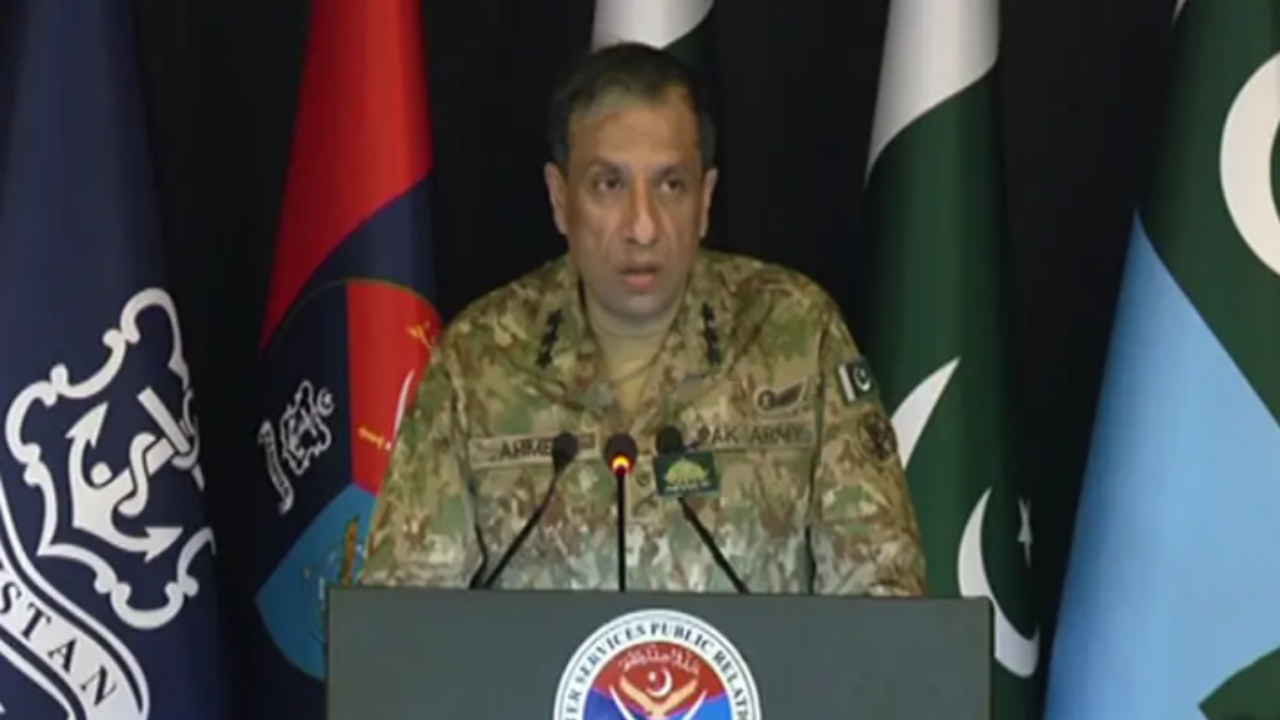
Director General Inter-Services Public Relations (DG ISPR), Lieutenant General Ahmed Sharif Chaudhry, on Tuesday stated that Afghan nationals were involved in several major “high-impact” terrorist incidents carried out in Pakistan during 2025, as he presented a comprehensive review of the country’s counter-terrorism efforts over the past year.
Addressing a press conference, the military spokesperson said the sole purpose of the briefing was to outline counter-terrorism measures, stressing that terrorism remains the most serious threat to Pakistan’s national security.
He described 2025 as a “landmark and consequential year” in Pakistan’s fight against terrorism, citing four key factors: unprecedented intensity in counter-terrorism operations, nationwide clarity on the nature of terrorist groups, international recognition of Pakistan’s stance on terrorism emanating from Afghan soil, and the reinvigoration of the National Action Plan (NAP).
The DG ISPR said that terrorist groups operating in Pakistan have no religious legitimacy and are designated by the state as Fitna-al-Khawarij (for the banned Tehreek-i-Taliban Pakistan) and Fitna-al-Hindustan (for Balochistan-based militant groups), highlighting alleged external sponsorship and destabilisation efforts.
Counter-Terrorism Operations and Casualties
Sharing operational data, Lt Gen Chaudhry said Pakistani law enforcement agencies conducted 75,175 intelligence-based operations (IBOs) in 2025—an average of 206 operations per day. Of these, 58,778 were carried out in Balochistan, 14,658 in Khyber Pakhtunkhwa (KP), and 1,739 in other regions.
A total of 5,397 terrorist incidents were recorded nationwide, with 71 per cent occurring in KP and 29 per cent in Balochistan. During the year, 2,597 terrorists were killed, while 1,235 civilians and law enforcement personnel were martyred.
He further noted that 27 suicide bombings took place in 2025, including two involving female attackers.
The DG ISPR attributed the concentration of attacks in KP to what he termed a “politically conducive environment” and the persistence of a political-terror nexus in the province.
Afghanistan’s Role and Regional Dynamics
Lt Gen Chaudhry linked the resurgence of terrorism to developments following the 2021 Doha Agreement, stating that Afghanistan had since become a hub for multiple terrorist organisations. He said commitments made by the Afghan Taliban regarding inclusive governance and preventing the use of Afghan soil for terrorism had not been fulfilled.
He alleged that Afghan territory was being used to organise, train, and direct militant activity against Pakistan, with financial and logistical support from external sponsors, particularly India. He also cited the availability of advanced military equipment left behind after the US withdrawal as a factor enabling militant operations.
According to the DG ISPR, intelligence assessments indicate that several thousand foreign militants have relocated to Afghanistan, further compounding regional security threats.
Major Terror Incidents and Afghan Involvement
Listing 10 major terrorist attacks carried out in Pakistan during 2025, Lt Gen Chaudhry said all 78 terrorists involved were Afghan nationals, and none escaped alive. These incidents resulted in the martyrdom of 60 civilians. He stressed that terrorism was not solely a military challenge but a national struggle requiring collective resolve.
Sixteen of the militants killed during the year were identified as high-value targets, including senior leadership figures of the TTP.
National Action Plan and Institutional Measures
The DG ISPR highlighted progress under the revised NAP, including the launch of Operation Azm-i-Istehkam, enhanced intelligence coordination, and improved border security measures. He cited Balochistan as a case study, pointing to district-level coordination committees, increased funding, police reforms, and community engagement initiatives aimed at dismantling the terror-crime nexus.
He acknowledged shortcomings in areas such as conviction rates, narcotics control, and illegal weapons enforcement, noting that these fall under civilian institutions but have a direct impact on counter-terrorism outcomes.
Afghan Repatriation and Border Security
Lt Gen Chaudhry said Afghan repatriation remains a key component of the counter-terrorism strategy. While refugee camps in Punjab and Balochistan have been cleared, progress in KP has been comparatively limited. He noted that deportation rates for illegal residents were significantly lower in the province.
He maintained that border closures with Afghanistan had yielded security benefits, including a decline in cross-border facilitation of terrorism and an increase in militant neutralisations.
Conclusion
Concluding the briefing, the DG ISPR reaffirmed Pakistan’s resolve to continue the fight against terrorism with “singularity of purpose and narrative,” emphasising that no political consideration or external pressure would supersede national sovereignty and security.
“This is Pakistan’s war,” he said. “No individual, group, or political interest stands above the security of the state.”
(If there is any need for correction, please let us know - Team Chatzyr )