
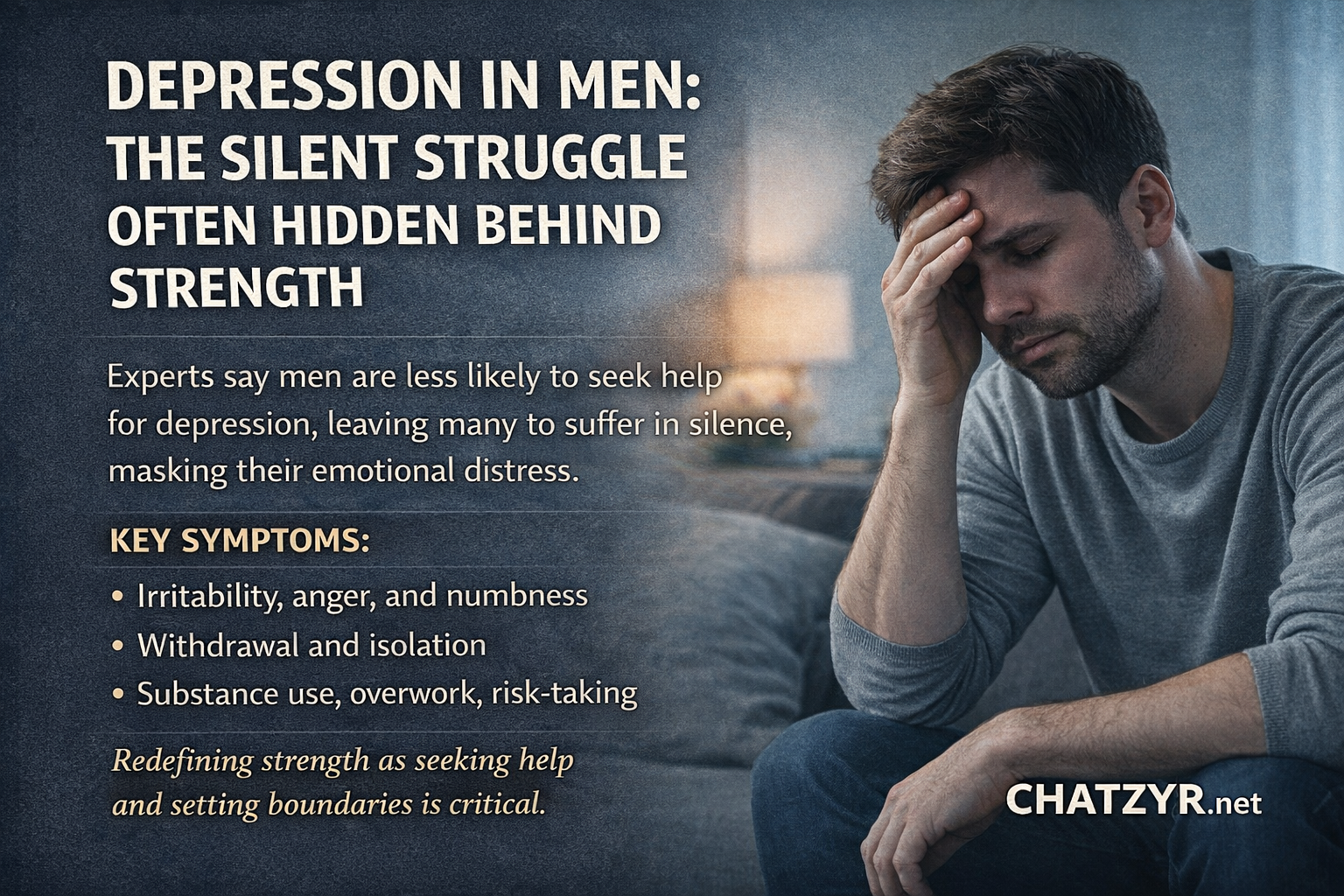
Depression in Men: The Silent Struggle Often Hidden Behind Strength
By Editorial Desk | Chatzyr
Depression in men remains one of the most under-acknowledged mental health challenges globally, often concealed by social expectations that equate masculinity with emotional restraint. While men experience depression at comparable rates to women, they are significantly less likely to seek help or openly discuss emotional distress.
Mental health specialists note that depression in men frequently presents differently. Instead of visible sadness, symptoms often include irritability, anger, emotional numbness, fatigue, risk-taking behaviour, or withdrawal from relationships. These signs are commonly misinterpreted as stress or personality changes rather than indicators of depression.
Speaking at a regional mental health awareness forum earlier this year, a senior clinical psychologist explained that many men delay seeking support until symptoms become severe. The expert noted that cultural pressure to remain “strong” discourages men from expressing vulnerability, leading to prolonged untreated depression.
Economic pressure, job insecurity, relationship strain, social isolation, and unresolved trauma are among the leading contributors to male depression worldwide. In some cases, men turn to substance use or overwork as coping mechanisms, further masking the underlying condition.
Specialists emphasize that managing depression in men begins with awareness, boundary-setting, and emotional regulation. Practical steps include limiting exposure to stress-inducing relationships, maintaining routine sleep and physical activity, and speaking openly with trusted individuals. Professional support, when accessed early, significantly improves recovery outcomes.
Mental health advocates stress that redefining strength as self-awareness and help-seeking is critical to reducing long-term harm among men.
Why it matters now: Rising economic uncertainty, social isolation, and workplace stress are increasing depression risks among men, making early recognition and support more urgent than ever.
Published on Chatzyr.net
Written By Editorial Desk | Team Chatzyr