
AI Market Crash: Nasdaq Enters Correction Territory as $3 Trillion Wiped Off Wall Street | ChatZyr
By Editorial Desk | Team ChatZyr
Wall Street suffers one of its sharpest technology sell-offs
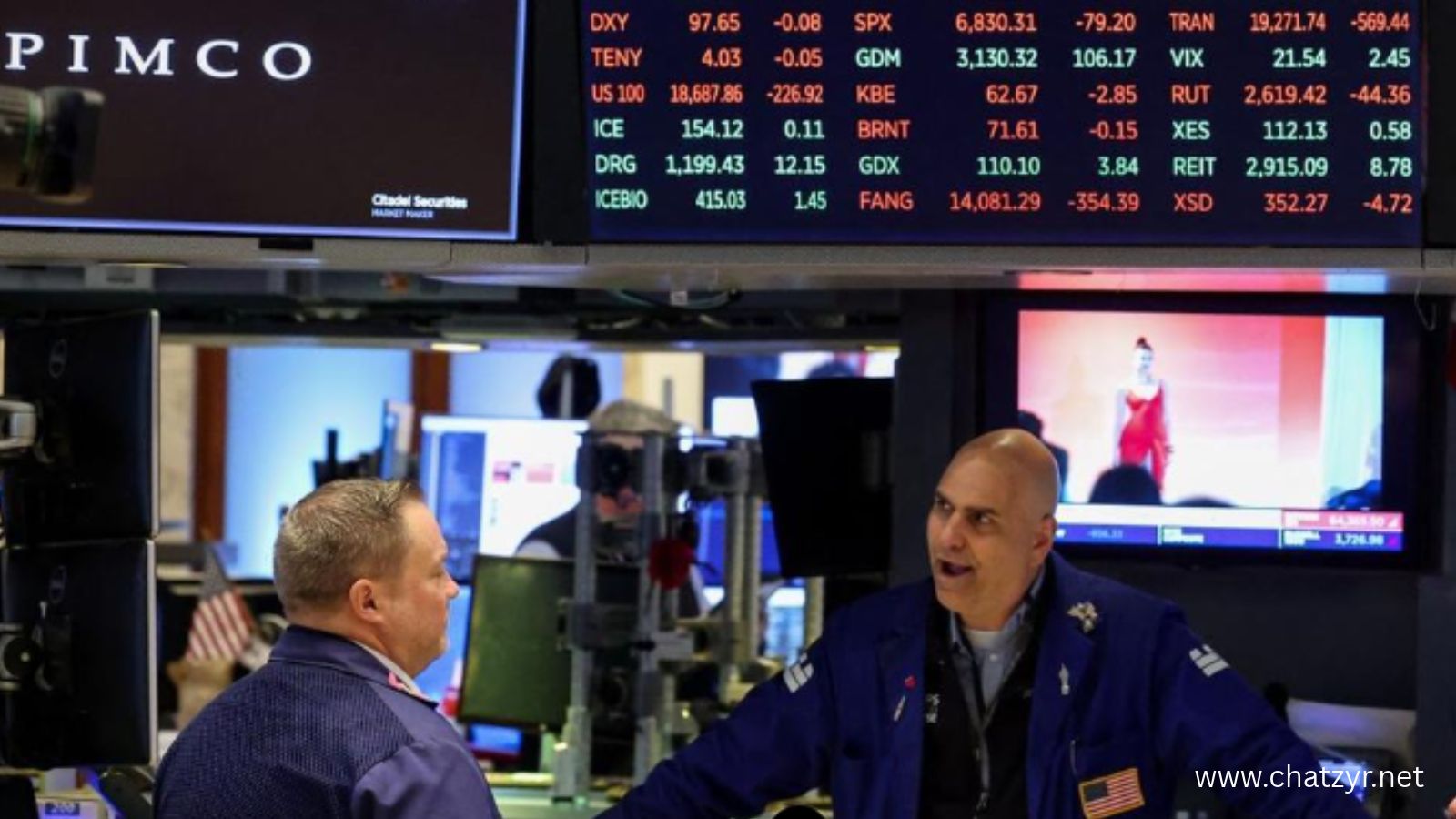
The artificial intelligence boom has faced a major financial test after a technology-led stock market sell-off erased nearly $3 trillion from the combined market value of S&P 500 companies, sending shockwaves through financial markets in the United States and Asia.
On Thursday, November 5, the Nasdaq Composite plunged 5.52%, recording its steepest one-day decline in 19 months and moving into correction territory, defined as a fall of at least 10% from a recent peak.
The S&P 500 dropped 4.36%, while the Dow Jones Industrial Average fell 3.44%, losing 1,833 points.
The scale of the decline has placed artificial intelligence investment under renewed scrutiny. Companies that had benefited from enormous enthusiasm surrounding AI development suddenly faced intense selling pressure as investors reconsidered the costs, risks and potential returns of the technology boom.
The sell-off followed the Democrats' strong performance in the US midterm elections, which raised investor concerns about possible tougher scrutiny of AI infrastructure and data-centre expansion.
Why investors are questioning the AI boom
Artificial intelligence has become one of the biggest investment themes in the global economy.
Major technology companies are spending enormous amounts on advanced processors, data centres, electricity infrastructure and computing systems to develop and operate increasingly powerful AI models.
These investments have helped drive demand for semiconductor manufacturers and technology companies supplying the infrastructure behind the AI industry.
However, the latest market reaction highlights a growing concern: how quickly can these investments generate enough revenue to justify their costs?
Building and operating AI data centres requires substantial capital. Companies must secure specialised chips, land, electricity, cooling systems and network infrastructure before many projects can generate meaningful returns.
Investors are increasingly questioning whether the industry's rapid expansion can continue at its current pace without creating financial pressure.
The concern is not that artificial intelligence has suddenly become irrelevant. It is that expectations surrounding future growth may have moved ahead of what companies can realistically deliver.
Nvidia and semiconductor companies face heavy losses
The semiconductor industry was among the hardest-hit sectors during Thursday's trading session.
Nvidia shares fell more than 9%, while the Philadelphia Semiconductor Index dropped approximately 12.2%, recording its biggest one-day decline since April 2025.
Other companies linked to AI infrastructure and chip production also experienced significant losses.
The pressure extended beyond chip manufacturers. Data-centre operators and companies supplying electricity and equipment to large computing facilities also came under pressure.
The developments show how closely the financial performance of the technology sector has become connected to expectations surrounding artificial intelligence.
When investors question the future pace of AI investment, the impact can spread across an entire supply chain.
US political developments add another layer of uncertainty
The Democrats' midterm election victory has added a political dimension to the market reaction.
Investors are concerned that stronger Democratic influence in Washington and certain state governments could bring additional scrutiny of large data-centre projects and AI infrastructure development.
Some communities have already raised concerns about the electricity consumption, water requirements and environmental impact of major data centres.
These concerns could influence future approval processes and local development policies.
However, tougher regulation has not been established as the direct cause of the entire market decline. Investors are responding to a combination of political uncertainty, questions about AI spending, company earnings and the financial risks associated with rapid infrastructure expansion.
The possibility of slower construction has become particularly important because the AI growth story depends heavily on the continued development of computing capacity.
Asia feels the impact of Wall Street's decline
The financial shock quickly spread across international markets.
Japan's Nikkei suffered a sharp decline, while South Korea's KOSPI and Taiwan's technology-heavy markets also came under severe pressure.
South Korea's market experienced a particularly dramatic fall, with trading circuit breakers triggered as shares plunged during Friday's session.
The developments underline Asia's importance to the global semiconductor supply chain. South Korea, Taiwan and Japan play significant roles in manufacturing chips, electronic components and equipment used by the world's technology industry.
A prolonged reduction in AI investment could therefore affect businesses well beyond Silicon Valley.
Manufacturers, suppliers and technology exporters across Asia could face pressure if major technology companies reduce or delay infrastructure spending.
Markets begin to recover, but uncertainty remains
Friday brought early signs of relief.
Reuters reported that Nasdaq futures climbed as semiconductor shares recovered some of their previous losses. Nvidia and several other major chipmakers also moved higher in pre-market trading.
This recovery suggests that investors were reassessing Thursday's dramatic decline rather than treating it as confirmation that the entire AI industry had collapsed.
However, a short-term rebound does not resolve the underlying questions about AI spending, profitability and regulation.
Markets will continue watching company earnings, investment commitments, economic data and government policy developments to determine whether the technology sector can regain investor confidence.
Is the artificial intelligence revolution in danger?
The latest sell-off does not mean artificial intelligence is reaching its end.
AI continues to offer significant opportunities in healthcare, education, manufacturing, finance, transportation and software development.
Businesses around the world are exploring ways to use the technology to improve productivity, automate processes and develop new services.
But the financial markets are beginning to distinguish between technological potential and commercial performance.
A technology can transform society while individual companies still struggle with excessive spending, high valuations or weak returns.
That distinction could shape the next stage of the AI industry.
Why this matters to ordinary people
The AI investment boom affects far more than stock-market investors.
Technology infrastructure influences employment, electricity demand, business competition, consumer products and the development of digital services.
A slowdown in data-centre construction could affect semiconductor manufacturers, construction companies, energy suppliers and technology workers.
At the same time, stronger regulation could influence where AI facilities are built, how much energy they consume and how companies develop their products.
For consumers, businesses and investors, the coming months may reveal whether the enormous financial commitments behind artificial intelligence can deliver sustainable economic benefits.
The AI revolution may still have enormous potential, but Wall Street has delivered a powerful warning: future promises must eventually produce real financial results.
Disclaimer: This article is based on financial-market reporting available on November 6, 2026. Market figures reflect reported trading movements and may change. Investor concerns about political and regulatory developments are presented as market interpretations, not confirmed future government policies. This article is for general information and does not constitute financial or investment advice.
Credits: Reuters, Associated Press and other cited financial reporting.
Written By Editorial Desk | Team ChatZyr
Published on Chatzyr.net
ChatZyr — News That Matters.